|
|
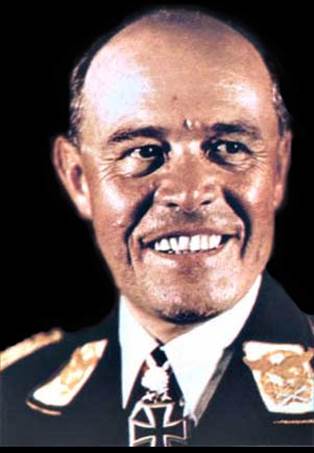
The Luftwaffe Generalfeldmarschall
Insignia GFM Albert
Kesselring |
|

|
Please note: The information
shared here is merely opinion-based criteria resulting from decades of study
as an enthusiast and collector of this genre. It is not definitive, nor offered as “expert”
opinion. There is still much we
do not know and may never know about the manufacture and variants produced
during WWII, and without surviving documentation, speculation will always be
a part of this hobby for some material.
I present this merely as a guide based on examples and information
that I am comfortable with and use in my own collecting criteria. |
In the German Luftwaffe of World War Two there were only six
men promoted to the highest rank of Generalfeldmarschall
(for a brief overview and mini biographies of the Luft GFM, go to the Luft GFM Bios page). When you consider that one of them, GFM
von Greim, was only promoted in the last 12 days of the war and another,
Hermann Goring, was early in the war promoted up to Reichsmarschall, it is a
very rare rank indeed. As such,
original examples are extremely difficult to find. Many thanks are owed to Kai Winkler and
the private collecting arena all of whom have provided many fine examples of
these rare pieces. Of particular
interest, note all the different variations in manufacture of the shoulderboards, batons and collar tabs that Milch alone
possessed. For such a rare rank it
is amazing how diverse the variation.
Yet considering the exclusivity of the rank, the elite status and the
fact that Hermann Goring may have been involved in some of the design and
manufacturing decisions, in the end it is probably not that unusual at all.
Shoulderboards
|
|
|
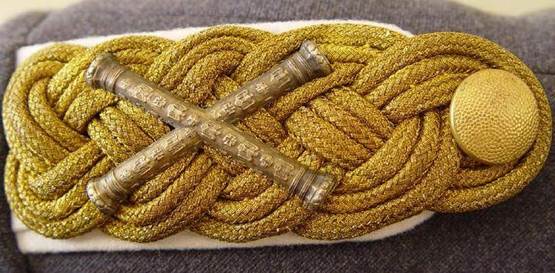
Regulation Luftwaffe Generalfeldmarschall
shoulderboard from the uniform of GFM Milch. All three cords in gold bullion over
white underlay with “800” marked, stamped silver batons in the
correct Luftwaffe pattern of alternating wehrmacht
eagle, Balkan cross and Iron cross.
These are the smaller pattern baton devices, similar in size to the
Heer examples. Baton length, from
end to end is approximately 48mm. (Holzauge collection) |
|
|
|
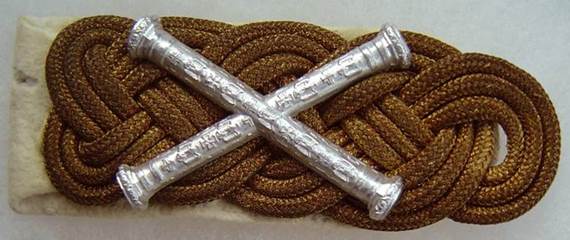
A standard size tunic shoulderboard
belonging to GFM Milch on matte gold bullion with the larger pattern set of
aluminum batons, which contrast quite brightly against the aged gold
bullion. Note the difference in
size of batons between this set and the smaller silver batons on the tunic
above. Baton length, from end to end is approximately 62mm. (private collection) |
|
|
|
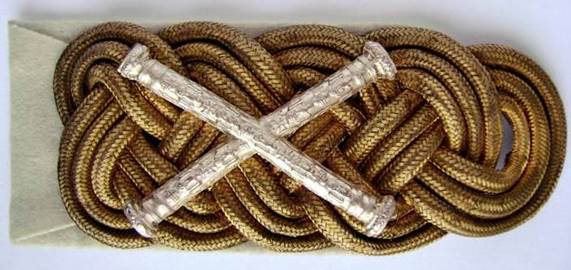
Another example of the large pattern, oversized batons
with these examples being cast in silver, and fastened to a pair of equally
oversized shoulderboards in gold bullion cord. Baton length, from end to end is
approximately 62mm. (Private collection) |
|
|
|
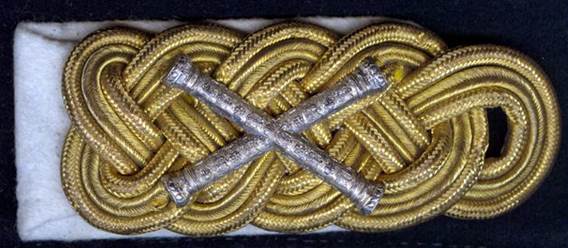
Yet another interesting variant from GFM Milch in that the
inner gold cord is rendered in the soutache pattern typically used for the
silver inner braid of standard General officer pattern shoulderboard
construction. Most all GFM boards
observed (of regulation three gold cord design) have the inner cord being a
duplicate of the two outer gold cords and manufactured in the
‘basketweave’ pattern. (private collection) |
|
|
|
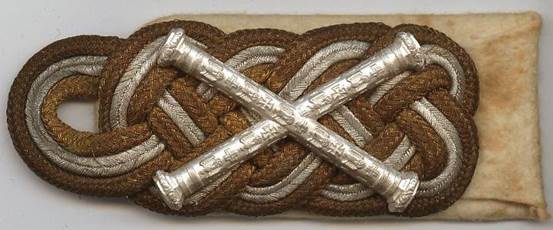
Aluminum style Luftwaffe GFM batons, this example attached
to standard pattern General officer shoulderboards
of interwoven gold and silver cords. (Holzauge Historical) |
|
|
|
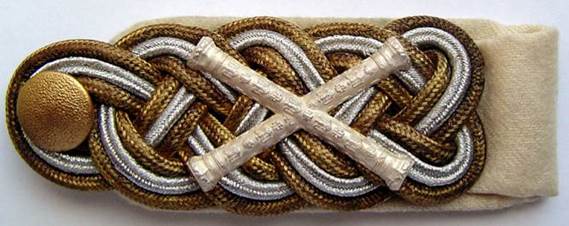
Yet another example of standard pattern General officer shoulderboards of interwoven gold and silver cords, with
a pair of the smaller 800 marked silver frosted batons. While, unlike the Heer, the original
Luftwaffe regulations for GFM specified all three cords in gold. Yet there
are many period photos showing that the standard pattern General’s shoulderboards were also utilized such as in this example
and the examples above. (private collection) |
Aluminum Baton Examples &
Detail-
|
|
|
|
|
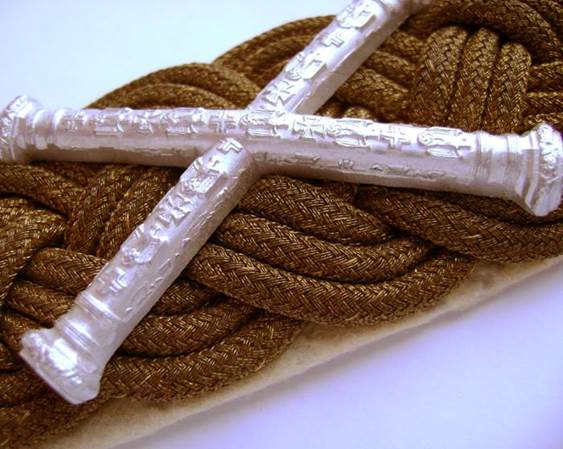
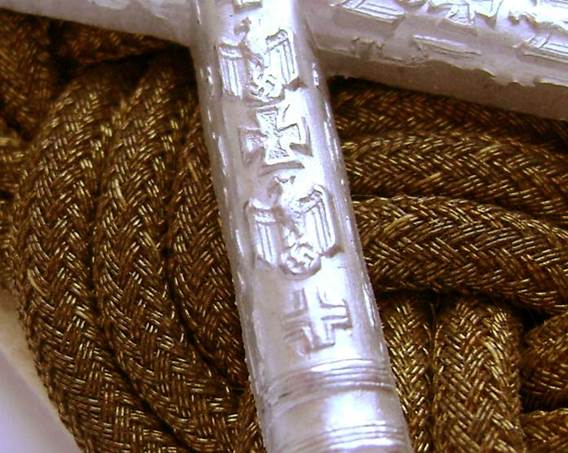
Close-up views of the large size, Luftwaffe pattern highly
detailed solid cast aluminum batons.
It’s possible this size may have been manufactured for use on
the large overcoat boards though there is photographic evidence that some of
the Luftwaffe GFM used them on tunic boards as well, more than likely to
correspond with the inherent oversize ego of their personalities, quite
befitting of this rank. One might
even assume that Hermann Goring had a hand in the design of this larger style
of batons. (private collection) |
|
|
|
|
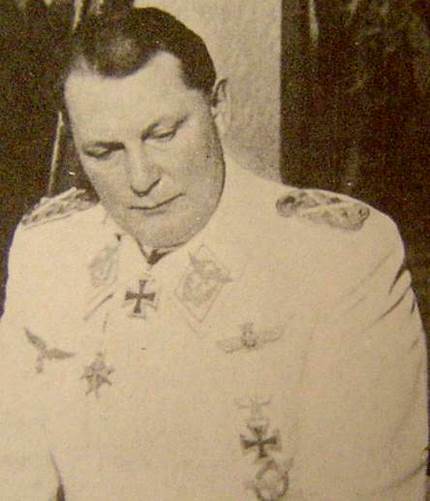
Period photos of Milch and Goring both wearing the
oversize batons on their tunic shoulderboards. |
|

|
|
|
|
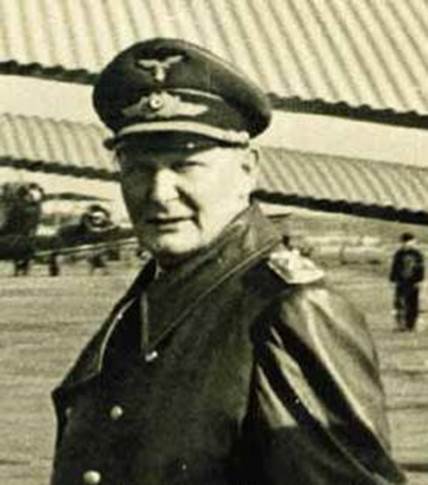
Goring wearing the oversize batons on overcoat shoulderboards. (photos courtesy of Humberto Corado collection) |
|
|
|
|
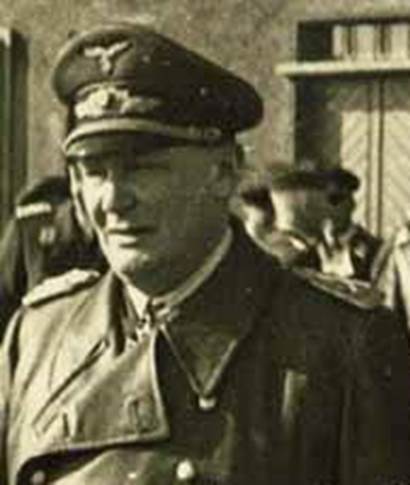
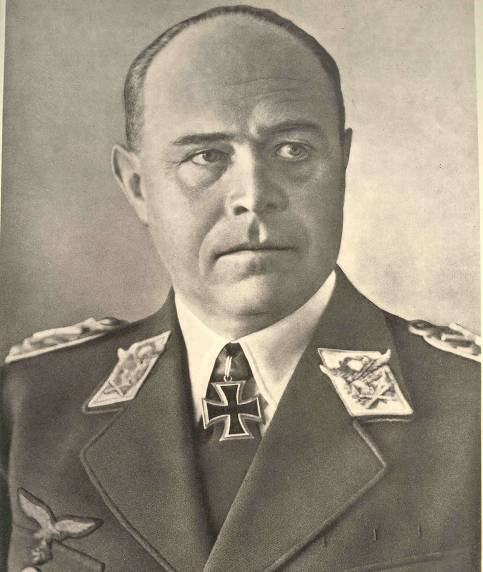
GFM Kesselring with the larger sized batons on his
tunic shoulderboards. |
Silver Baton Examples and
Detail-
|
|
|
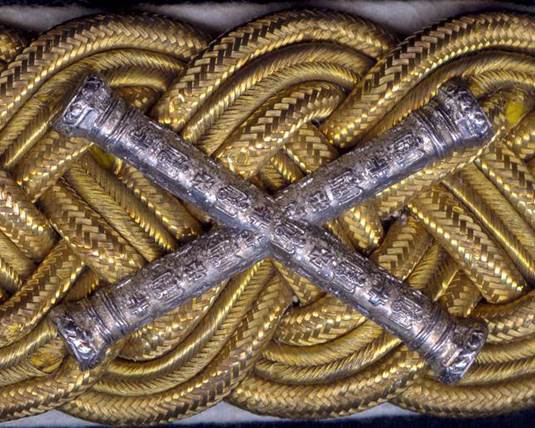
These batons are standard Luftwaffe pattern in
silver. Note the construction
detail of the inner gold soutache braiding normally found on the silver inner
cord of General officer shoulderboards.
Another interesting note about this board is that it appears to have
previously had the larger set of batons attached, which were replaced by this
smaller version. (private collection) |
|
|
|
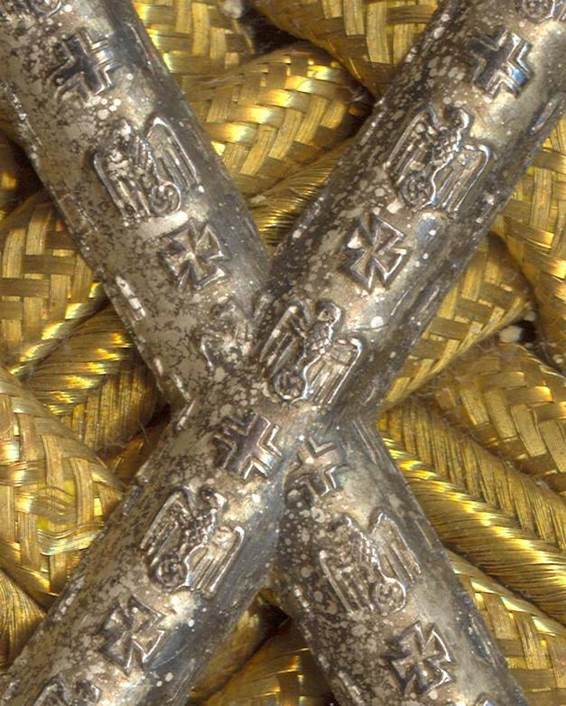
Close up of the fine detail in the of stamping of these
batons….note that even the chest feathers of the Wehrmacht eagle are
visible in the stamping. Some
baton devices, however, have much softer and less crisp detail. Tiny detail
like this is what set the German’s apart from other nations in the
quality of their military uniforms, and what keeps them at the forefront
value-wise in the militaria field of collecting today. When you consider how few men held
this rank, it is almost unbelievable in today’s world that such
attention to detail would be observed for a rank that only a handful of men
would realize. |
|
|
|
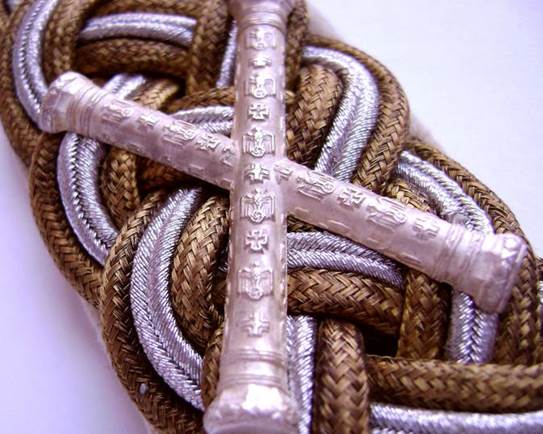
This set of silver batons have a silver frosting applied. (private collection) |
|
|
|
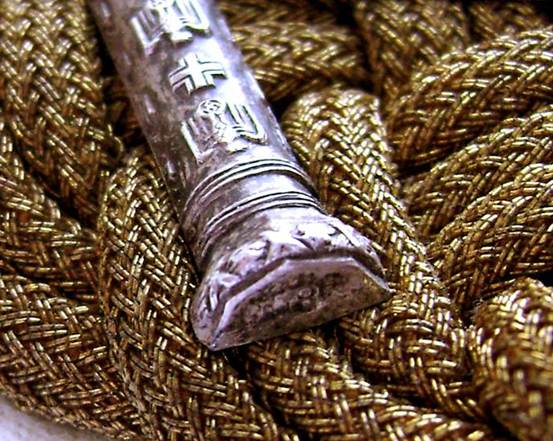
Silver batons are sometimes marked with silver content, in
this case “800”, which is typically stamped on one of the end
caps. (private collection) |
|
|
|
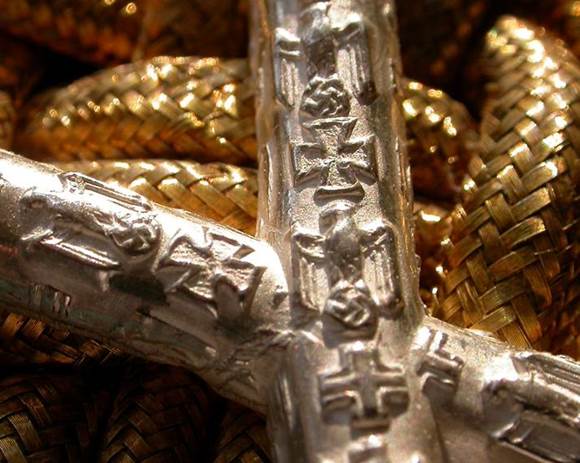
This particular set of silver
batons have been hollow cast and are the larger size (similar in size to the
aluminum large batons). The
smaller baton examples however, are more typically found to be stamped in
silver and hollow but according to regulations may also be hollow cast. Most all modern reproductions are of
the smaller batons and usually solid cast, sometimes very well detailed. Stamping or casting of silver and
aluminum both seem to have been utilized, though the opinion is that any of
the smaller batons that are solid cast are likely post-war
reproductions. (Private collection) |
|
|
|
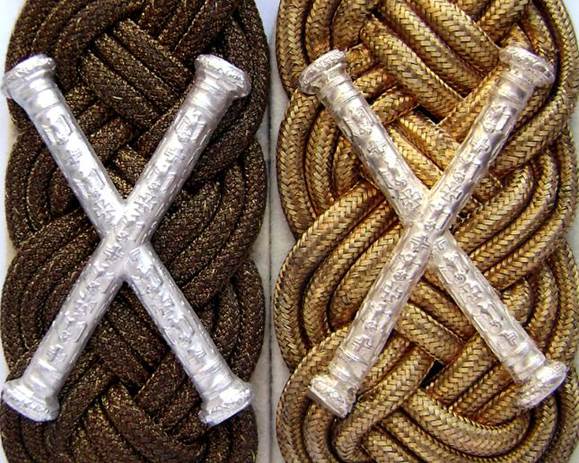
A comparison of the larger Luftwaffe baton devices in both
aluminum (on the left), and silver (on the right). |
|
|
|
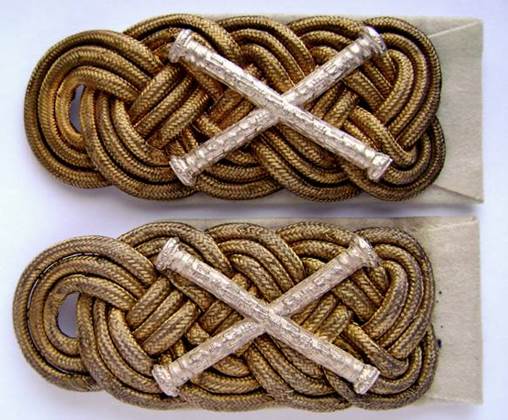
A set of the larger boards with bright gold cords and
large silver batons. They were
likely designed for use on the greatcoat and for more formal, dress
occasions, though photographic evidence shows that these were also worn on
tunics by Milch and Kesselring. Note that this is not a ‘matched’
pair in that the button loops are both for the same side. If you study period photographs you
will notice that it is not unusual at all for field grade and General
officers to have a mismatched set of boards like this on their uniforms. (Private collection) |
|
|
|
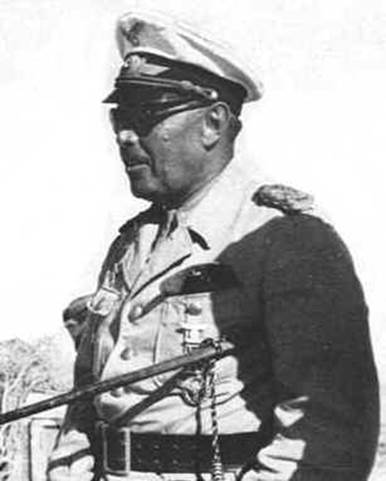
GFM Kesselring wearing a pair of the large, oversized shoulderboards on his tropical tunic. It appears by the faint outline of the
batons that these boards have the oversized batons as well. Note the GFM interim staff tucked
under his arm and the white cap top with removable eagle. |
|
|
|
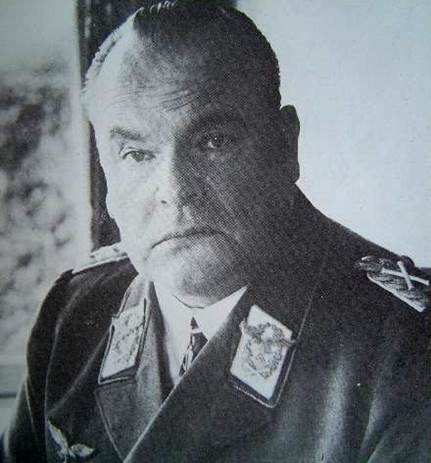
Another somewhat common tailor’s error was to put
the boards on the wrong sides (or backwards), thereby tilting the face of the
boards to the back of the tunic rather than the front, as seen here on GFM Sperrle’s tunic. Evidence like this is a good thing for
collectors to keep in mind when adhering too tightly to
‘absolutes’. Even at
the Generalfeldmarschall level the simplest
regulations were not always followed and their choice in tailors may not have
always been aware of regulations, nor been given a matched set to work with. |
|
|
|
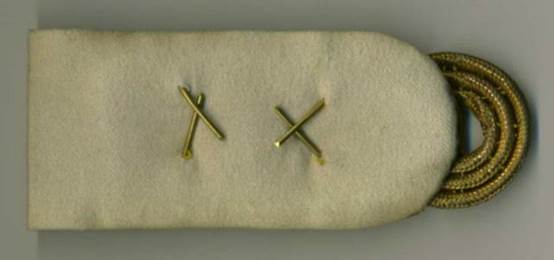
Another ‘absolute’ often bantered about by
collectors is that the retaining prongs of GFM boards should not protrude
through the backing. This is not
always the case, as the reverse of the above GFM Milch boards shows. Most do not protrude, but some do, and
Rommel’s inventory of GFM shoulderboards had
both examples. Materials used for
the prongs can also vary. (Private Collection) |
|
|
|
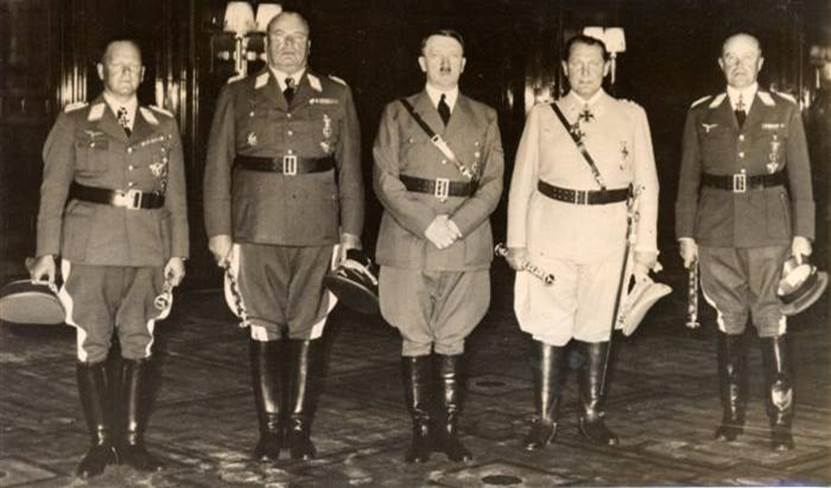
Luftwaffe GFM’s Milch, Sperrle and (to the right of Hitler and Goring), Kesselring. This is an interesting photo in that it shows the variance in size of GFM shoulderboards that were worn amongst these three men, with each wearing a different size of boards. The largest man, Sperrle, is wearing the smallest boards. Milch is wearing a very large, fat set of boards (possibly overcoat size) and Kesselring appears to be wearing a larger, or longer set as well. |
|
|
|
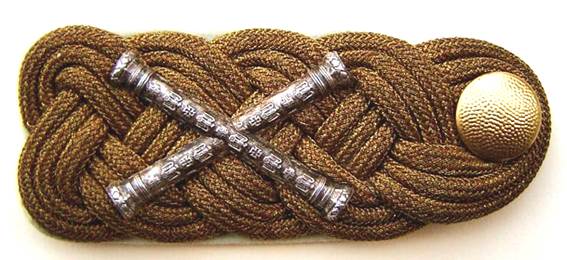
Another GFM Milch shoulderboard
in matte gold bullion, with “800” stamped, silver batons. These
are the slip-on style with screw post buttons, which also could be worn on
the overcoat, leather coat, shirt or field tunic. (private collection) |
|
|
|
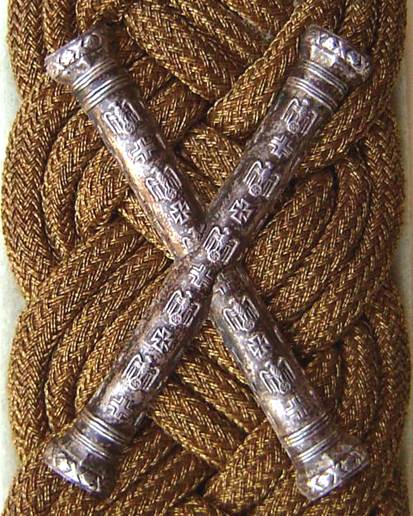
Close-up view of the highly detailed Luftwaffe pattern
batons stamped in 800 silver. (private collection) |
|
|
|
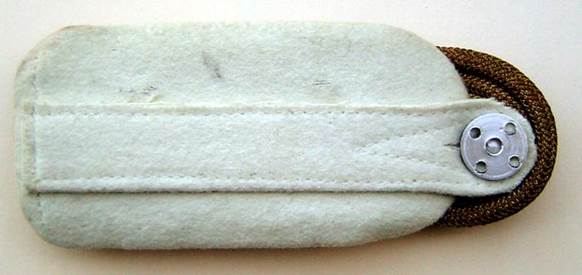
Back of the slip-on shoulderboards
showing the tongue and reverse of a screw-on button. (private collection) |
|
|
|
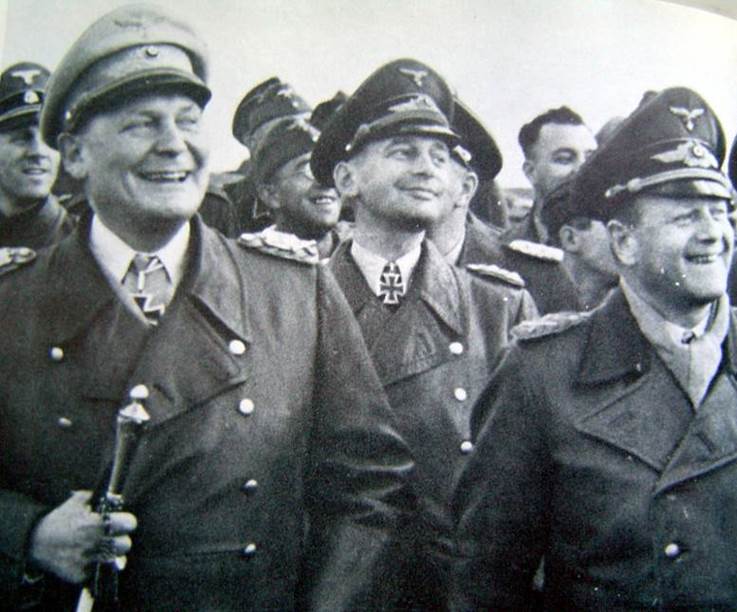
Period photograph of Reichsmarschall Hermann Goring and Generalfeldmarschall Erhard Milch. Milch is wearing tunic size slip-on shoulderboards on his leather coat, very similar to the
example pictured above with matching characteristics in wear. However, notice that Goring’s
slip-on shoulderboards are put on backwards! This would’ve been quite
noticeable in person as the eagles on his shoulderboard
devices were manufactured in separate left/right detail so that the eagles
would always face forward. If this
photograph had better detail, we would probably see that the Wehrmacht eagles
would both be facing backwards.
Yes, even the highest rank of World War Two was sometimes not
displayed correctly according to regulations! |
Collar Tabs
|
|
|
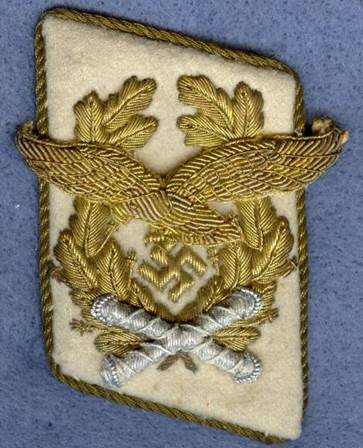
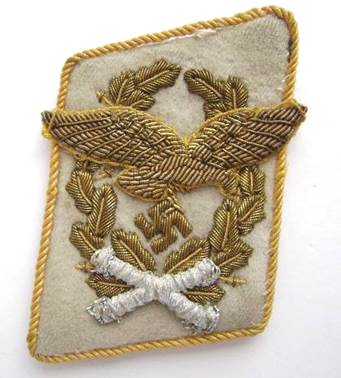
Regulation Luftwaffe Generalfeldmarschall
collar tab, beautifully hand embroidered in gold bullion, gold wire and
silver thread. The design reflects a Luftwaffe eagle overlaying wreath of
oakleaves and clutching two crossed, highly detailed batons on a white cloth
backing. Gold bullion piping
edges the tab. A stunning,
textbook example with excellent tightly woven detail. (private collection) |
|
|
|
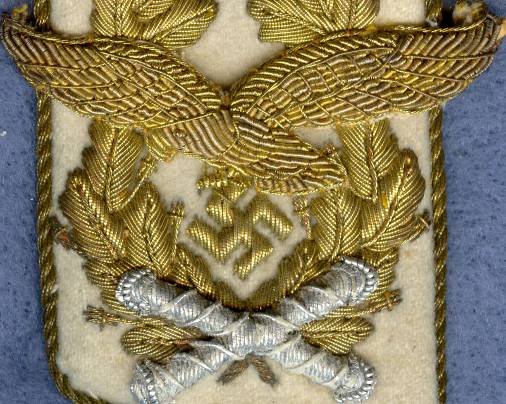
Detail view of the three basic design elements; wreath,
eagle and batons. (private collection) |
|
|
|
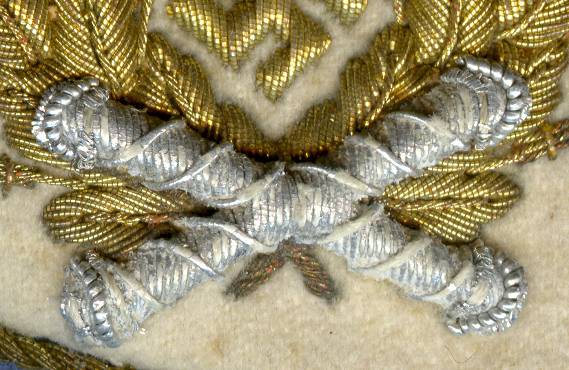
Notice the amount of detail present in the rendering of
the batons, a feature the reproductions routinely fail to accomplish. As these tabs age they all exhibit differing
amounts of deterioration in both the silver and the ability of the threads to
retain placement and shape. This
tab, overall, is one of the finest examples you’ll see. (private collection) |
|
|
|
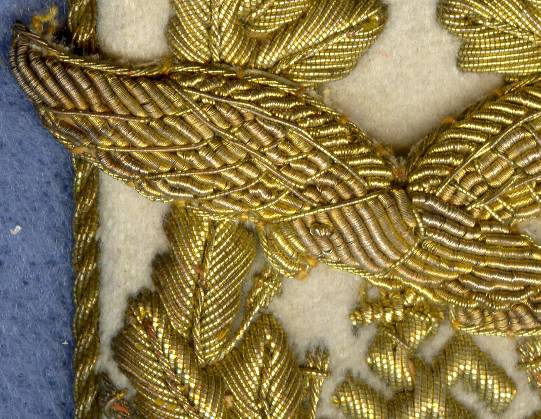
A view of some of the very fine embroidery detail executed
in gold bullion. (private collection) |
|
|
|
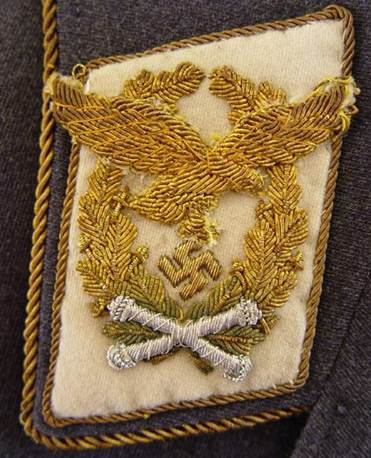
Regulation Luftwaffe Generalfeldmarschall
collar tab from the uniform of GFM Milch. Another beautifully executed tab. This
one again has gold bullion piping edging the tab. (Holzauge collection) |
|
|
|
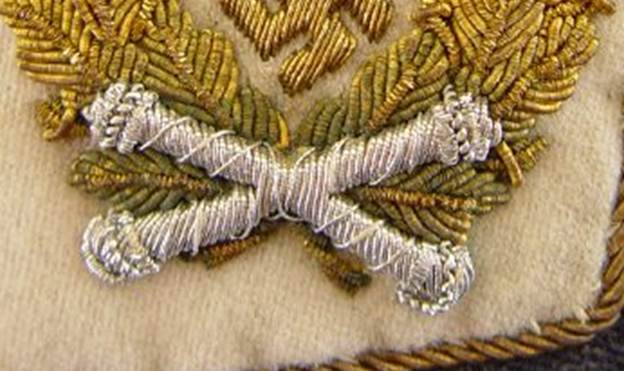
Close-up view of the batons on the Milch tunic collar tab. (Holzauge collection) |
|
|
|
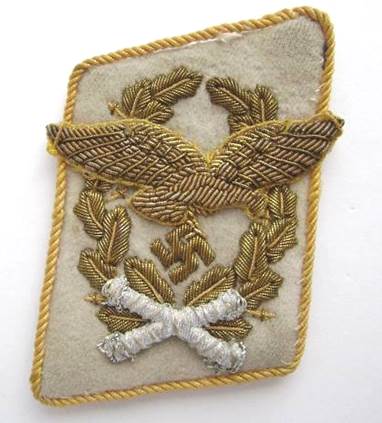
A matching set of GFM collartabs
for the left and right collars.
Notice that this particular set is edged and highlighted in celleon while the rest of the tab is embroidered in gold
bullion/wire and aluminum. Edging
General’s tabs in celleon while the basic
design was in bullion seemed to be a common practice in the Luftwaffe. (private collection) |

|
|
|
Close up photo of one of the above pair of tabs. (private collection) |
|
|
|
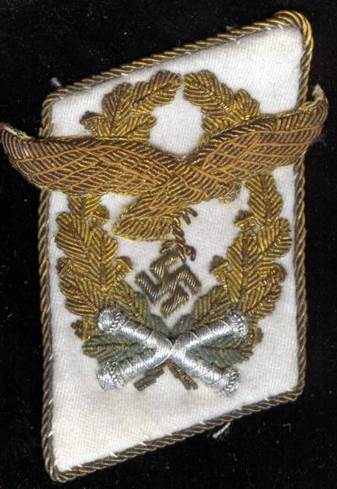
Another example from the Generalfeldmarschall
Milch collections, this one in all gold bullion with a gold wire
swastika. Unfortunately, what
cannot be seen through these pictures is the depth of the embroidery on
original GFM tabs. They are truly
stunning examples to handle in person. (private collection) |
|
|
|
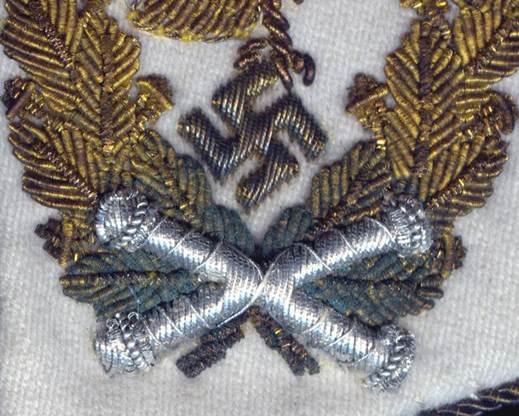
Notice how the silver thread verdigree
from the batons has bled onto the gold and tarnished the bullion. Also observe how consistent the manufacture
of this tab is to all of the above examples. (private collection) |
|
|
|
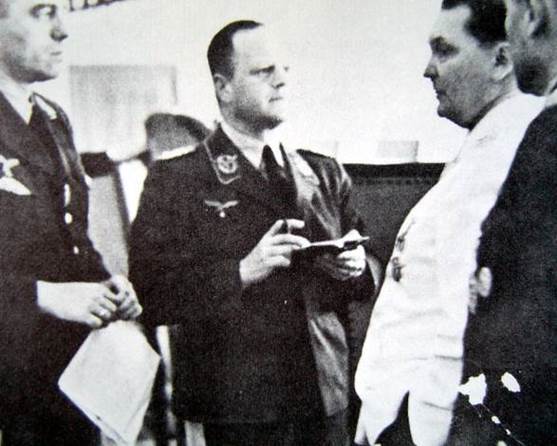
Here is a rather interesting photograph of Erhard Milch wearing Generaloberst tabs with a black backing, which was believed to be a short term practice for General officers when working with the Reichsluftfahrtministerium (Air Ministry). Pictures also exist of Goring wearing GFM tabs embroidered on a black background. The date of this photo is unknown, but most likely sometime during the late 1930’s. It is not clear whether the underlay on the shoulderboards were also black during this brief period. |
|
|
|
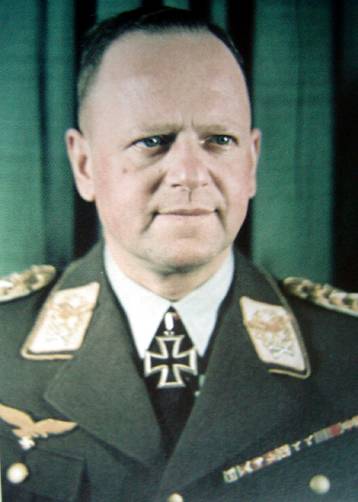
Generalfeldmarschall Erhard Milch. Note the bright gold cords and larger size shoulderboards. The collar tabs have shorter wing extensions beyond the piped edges of the tabs and are probably from the same manufacturer as the bullion/celleon highlited examples shown above. Collectors of this rank should take note that in period photos (and most known surviving examples) that the ‘wings’ which overlap the tabs do not appear to have a white backing. The length of the wings in their overlap of the tabs do, however, appear to vary. |
Luft GFM Collar Tab Variants
|
|
|
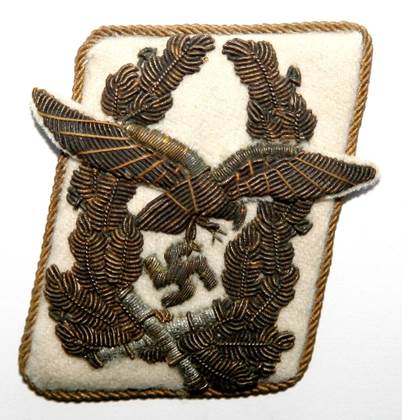
Here is a variant pattern Luftwaffe Generalfeldmarschall tab that is recognized as being of period construction and is also shown as an original example in one of the reference books. A clear photo of this example in wear has yet to be uncovered by the site author. Notice how small the batons are, that they are somewhat “buried” within the wreath, and how the baton embroidery pattern differs from the other original examples shown above. All of the period photos that offer a clear view of Luft GFM collar tabs show the batons having more relief, being much larger and longer, crossed at a more narrow angle and extending out beyond the wreath. This tab exhibits none of those characteristics, yet certainly appears to be period made. It is quite possible that upon promotion from Generaloberst to Generalfeldmarschall, a tailor simply had an embroiderer “add” a pair of batons to the Generaloberst tabs that were already on a uniform. Examples of tailors upgrading General officer tabs with extra “gulls” to show a promotion in rank can be seen in period photos and surviving examples. |
|
|
|
|
Notice the differences between the variant on the left,
and the known original on the right.
The batons are much larger and more pronounced on the right tab. Notice also how the overall shape of
the tab on the left is at a much less severe angle than the tab on the right. |
|

|
|
|
|
|
|
|
Period photos of Luftwaffe GFM collar tabs in wear. Notice how consistent and well defined
the crossed batons are on all of the photos. |
|