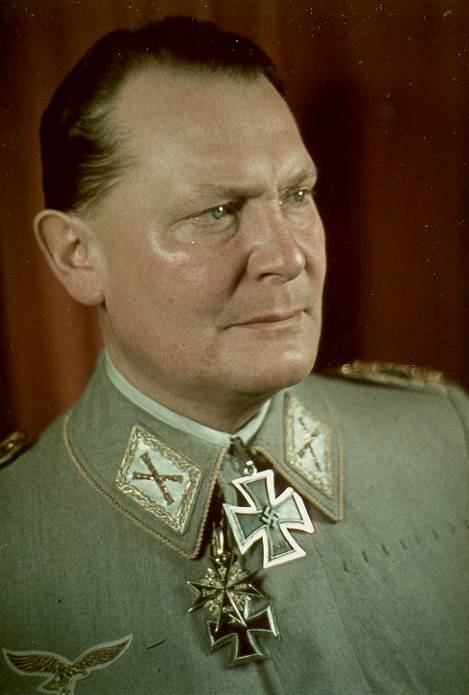
Reichsmarschall Hermann Goring
|
|
Reichsmarschall Hermann Goring Hermann Goring was one of the
more interesting and flamboyant characters of the Third Reich, traits
reflected in his personal direction of the design of both his rank insignia
and unique uniforms. His
appointment in 1940 as Reichsmarschall of the
Greater German Reich made Goring the highest ranking military officer of
World War Two, with the rank equivalent of a six-star General. Goring chose a soft, pearl gray
as the color for his uniform, departing from the blue-gray uniform scheme of
the Luftwaffe. He had endless
variations of his uniforms, with numerous different styles and minor alterations
and was known to change them multiple times within the same day. Goring also had a preference for
wearing white uniforms, a habit ridiculed by the German people while watching
newsreels in the theater as they wondered how he kept his uniforms so white
when many of them could not even obtain soap to launder their own clothes. To the left is what many consider
the ‘typical’ Reichsmarschall uniform
of the Imperial style Flyers Blouse in a soft pearl gray with a closed
collar. At Goring’s neck
hang the Grand Cross of the Iron Cross (he was the only recipient), the
Knights Cross and the Pour le Merite (commonly
known as the Blue Max), an award Goring earned while flying with the Richthofen squadron during World War I. |
Reichsmarschall Insignia
|
|
|
|
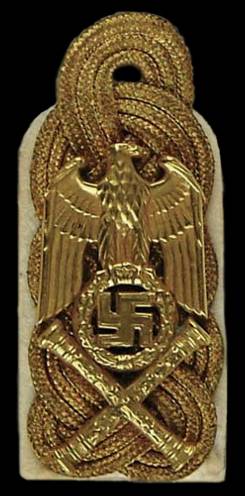
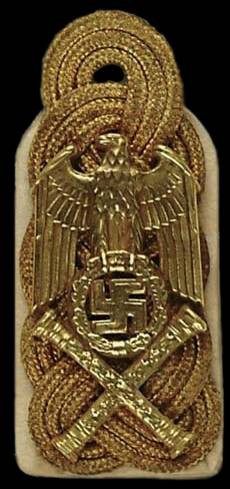
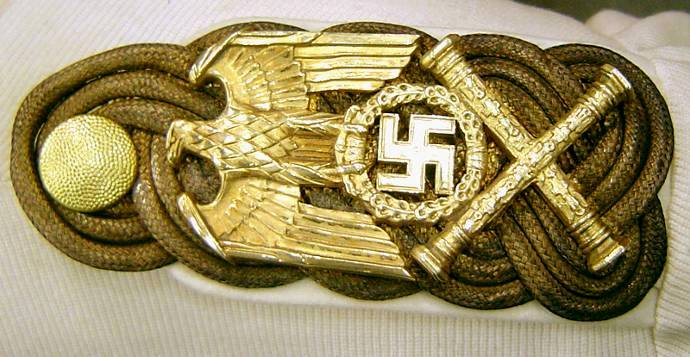
Hermann Goring’s left and right shoulderboard
insignia for the rank of Reichsmarschall. Notice how the eagles face different
directions on each board, so that during wear the eagle would always face
forward. |
|
|
|
|
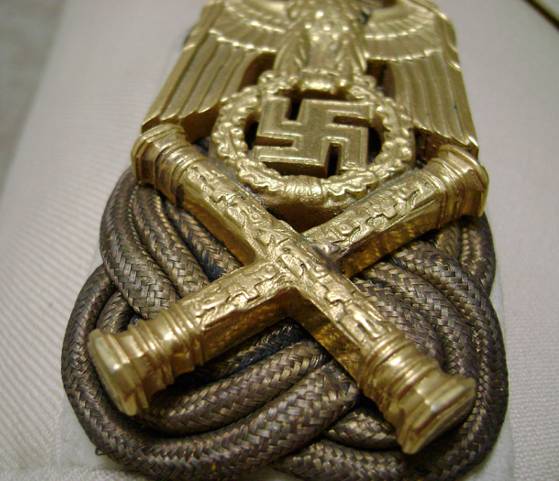
What is interesting about the gold RM shoulderboard
rank devices are the lack of detail on the crossed batons in comparison to
the silver baton devices on GFM boards (which were finely detailed accurate
representations, see Luft
GFM or Heer
GFM insignia pages). The RM
batons are also shorter and do not have an accurate representation of the
number of Iron Cross/Wehrmacht eagle/Balkan cross
symbols that are on the actual RM baton. |
|
|
|
Reichsmarschall shoulderboard for the right shoulder. |
|
|
|
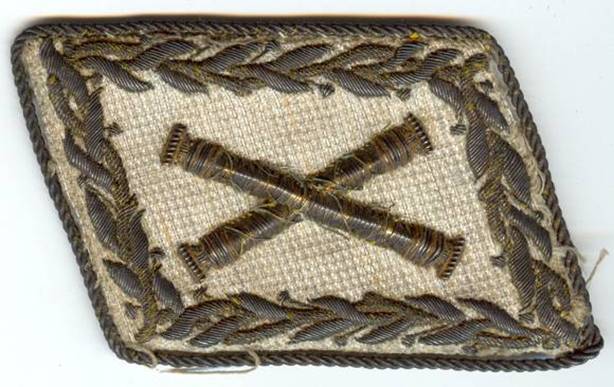
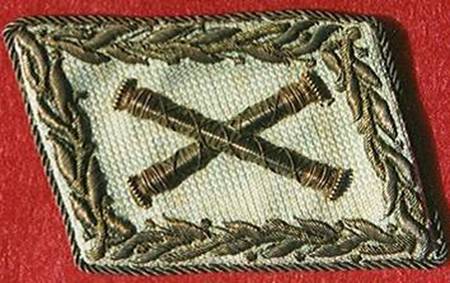
1941 pattern Reichsmarschall
collar tab for the right collar showing the crossed marshals batons
surrounded by laurel leaves. The
left collar tab was also a mirror image of this design (as seen on the Goring
uniform example above). In an
earlier pattern (from August of 1940 until March of 1941), the right collar
patch had exhibited the image of a Wehrmacht Eagle
with downturned wings. (private collection) |
|
|
|
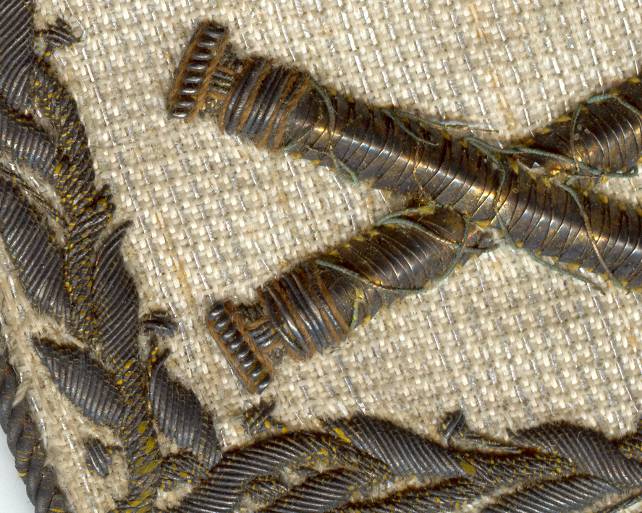
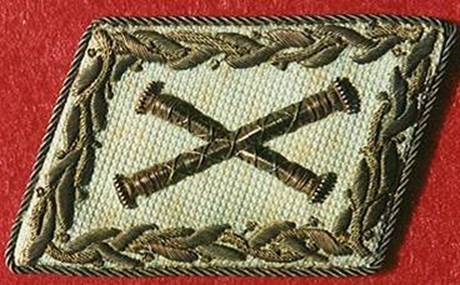
Construction detail of the Reichsmarschall
tab. Age and corrosion has taken
away some of the color detail of the silver and gold bullion, but still
reveals a high amount of quality in the workmanship and materials used to
make the highest rank of World War Two. (private collection) |
|
|
|
|
A pair of 1941 pattern Reichsmarschall
collar tabs. Notice the very distinct brocade background fabric that
all of the Goring tabs exhibit. (former private collection, current whereabouts unknown) |
|
|
|
|
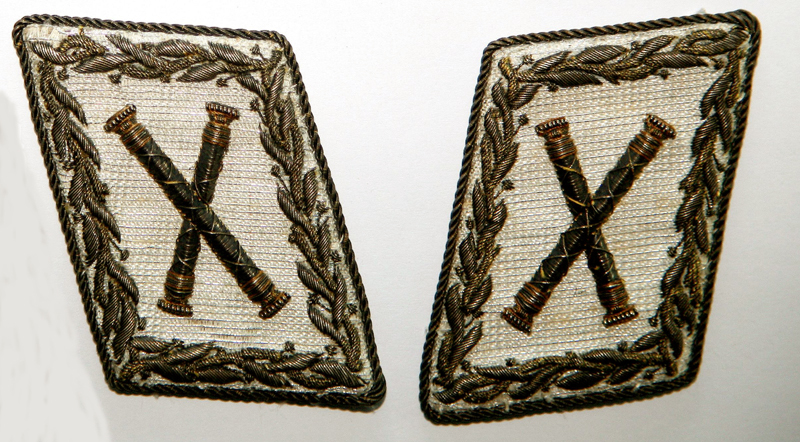
Another matched pair of 1941 pattern Reichsmarschall
collar tabs. (private collection) |
|
|
|
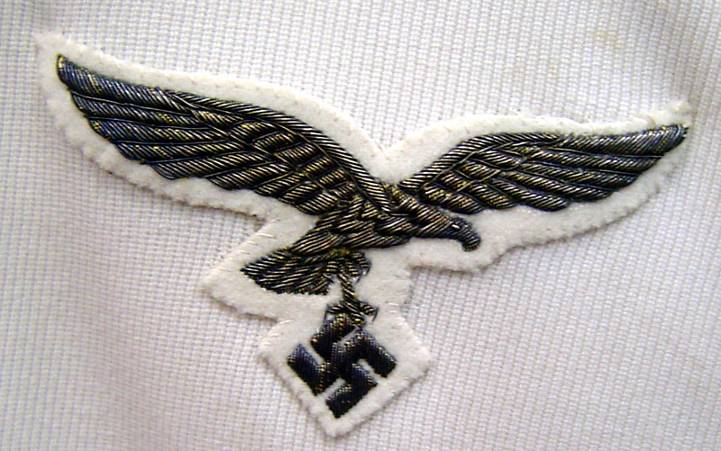
Goring also had his own special breast eagle designed,
which had longer more pointed wings than what was typically found on a
Luftwaffe General officer’s breast eagle. Most of the period photos show that
the breast eagle always had a white backing, regardless of the color of
uniform that he was wearing, but it is known that he also had breast eagles
on a backing of dove gray. (Paul Sack collection) |
Reichsmarschall Uniforms
The Undress
White Kleiner Rock Tunic for Reichsmarschall
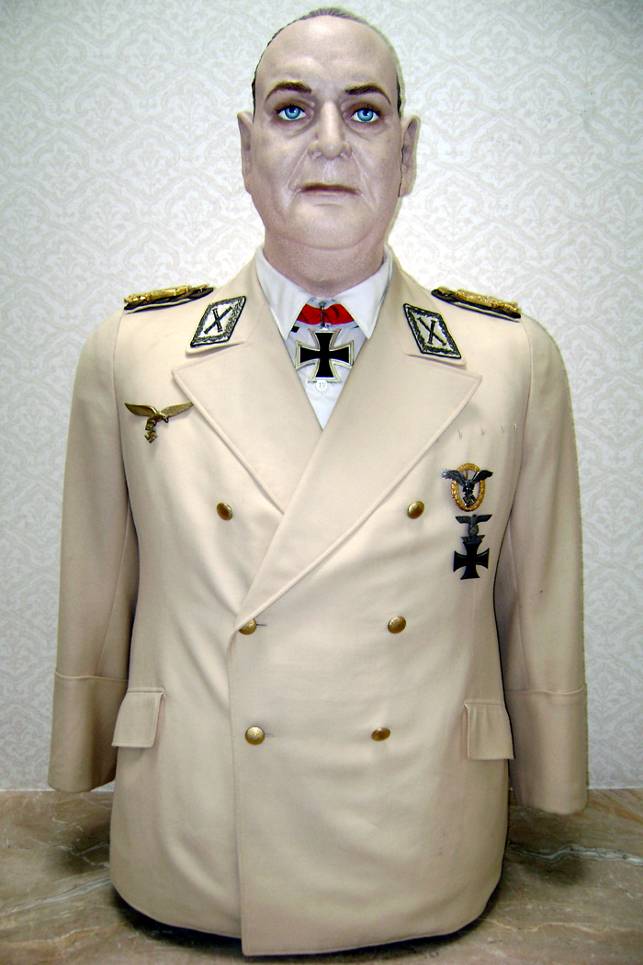
An example of the RM Goring white tunic in the double
breasted, open neck, Kleiner Rock style. Goring also wore this style of tunic in
dove gray with and without white lapel facings.
(Wolfe-Hardin collection)
|
|
|
|
|
|
|
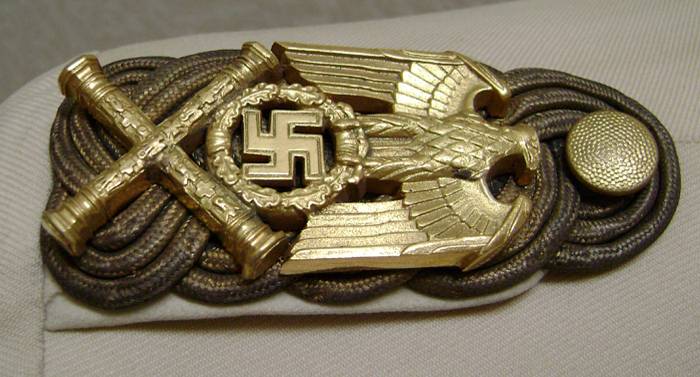
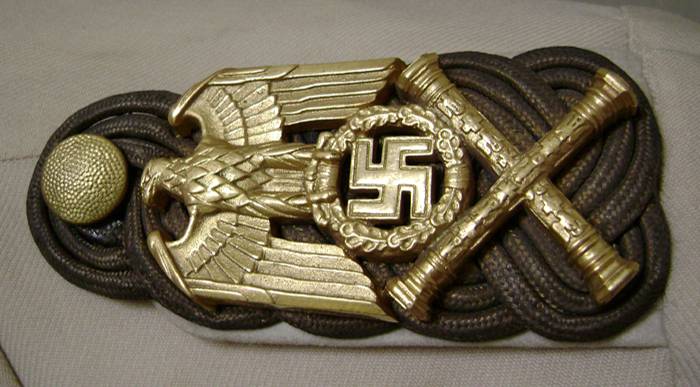
Left and right shoulderboards. Note how the eagles face forward on
each board so that they are always looking toward the front of the tunic. |
|
|
|
|
|
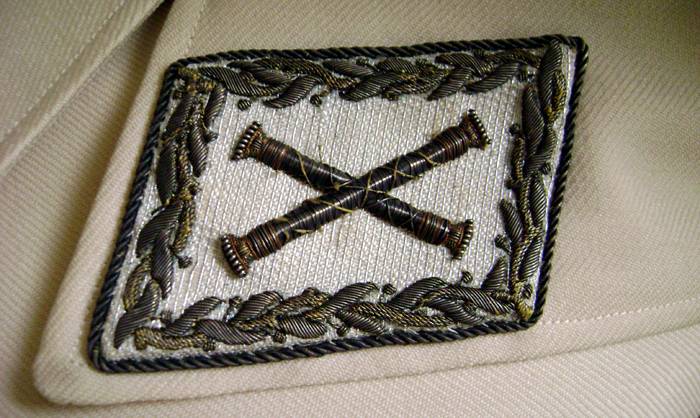
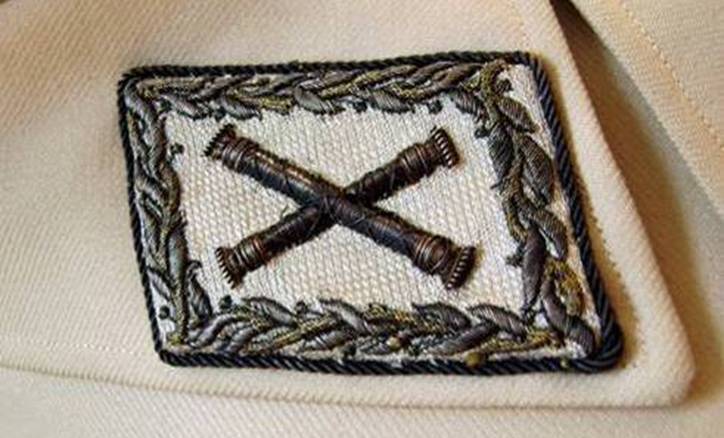
Right and left collar tabs. The embroidered detail on these are
unmatched and of the finest quality ever seen. There have been many attempts to
replicate Reichsmarschall tabs, but none of them
have even come close, when compared to an original. It is probably safe to say that nobody
will ever be able to reproduce the quality of embroidery and material that
the artisans of the era used. |
|
|
|
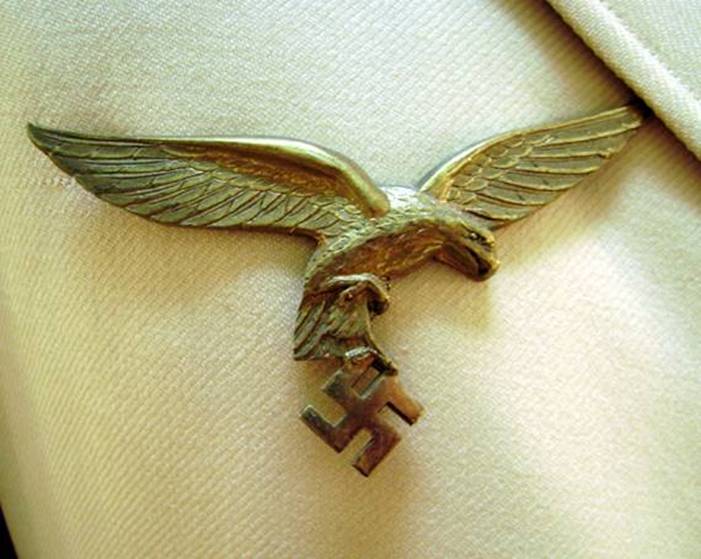
The gold, summer tunic pin-on eagle, in exquisite
detail. Note the early droop tail
design. |
|
|
|
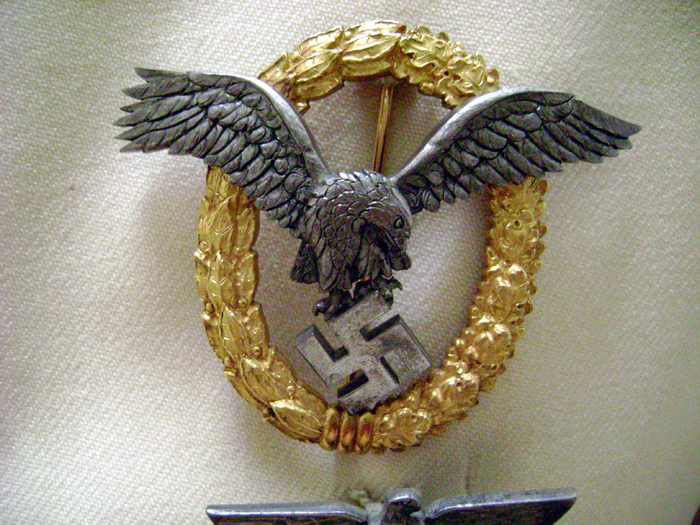
Goring’s original personal Pilots Badge. |
|
|
|
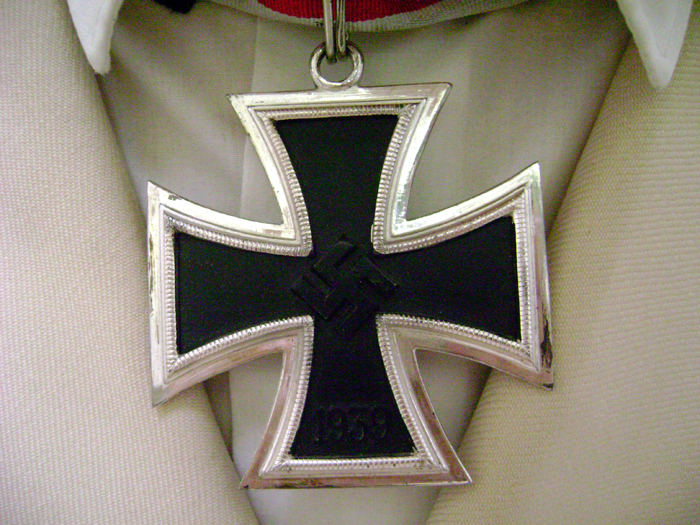
An original example of the Grand Cross of the Iron Cross,
captured by the 101st Airborne in the Berchtesgarden
area. Goring was the only WWII
recipient of this award. |
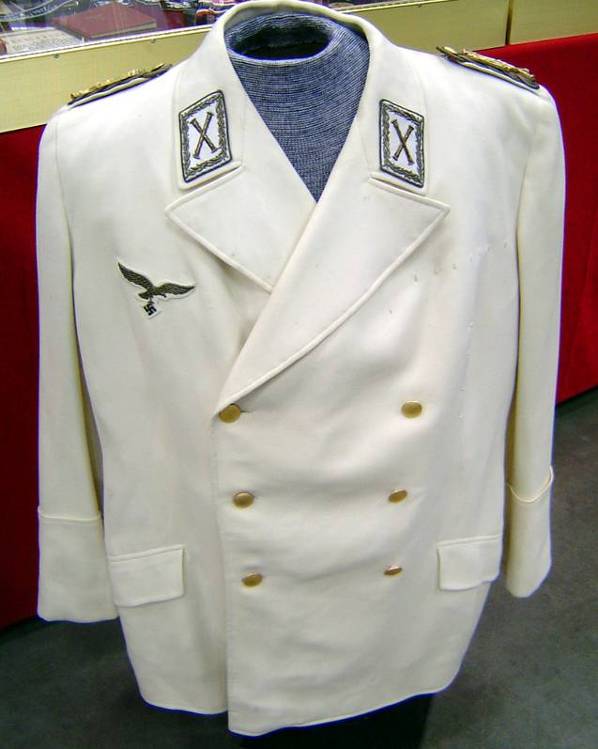
The Undress White
Kleiner Rock Tunic for Reichsmarschall
Yet another example of a RM Goring white tunic in the double
breasted, open neck, Kleiner Rock style. Goring’s favored uniform color was
white.
(Paul Sack collection)
|
|
|
|
|
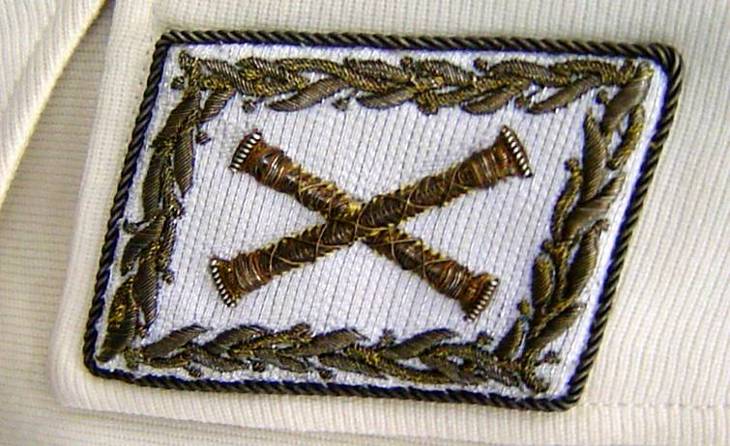
1941 pattern Reichsmarschall
collar tab from the white undress Kleiner Rock. |
|
|
|
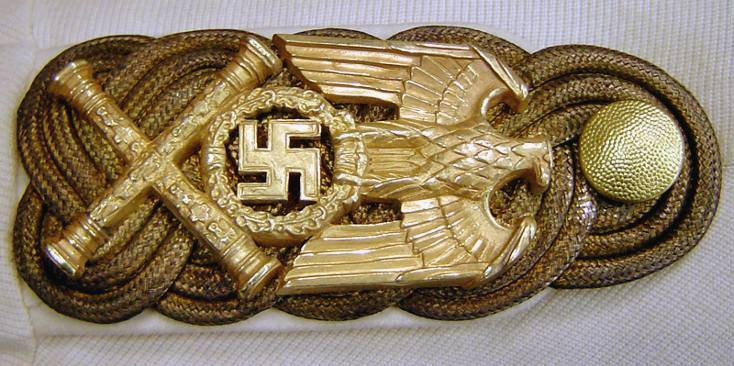
Reichsmarschall shoulderboard from the white undress Kleiner
Rock. |
Closed Collar
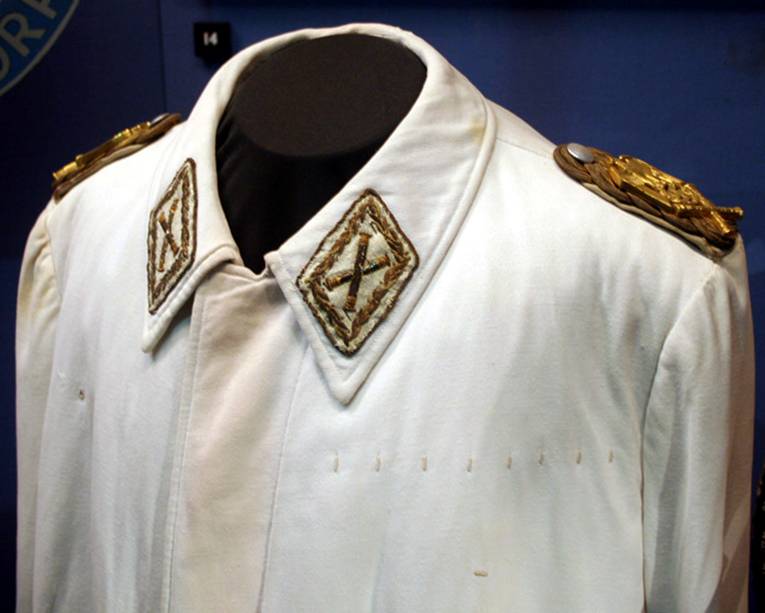
White Flyer’s Blouse for Reichsmarschall
This summer white tunic of RM Goring resides in the Imperial
War Museum of London. It is typical
of his favored style of tunic and is the design most often associated with the Reichsmarschall.
|
|
|
Hermann Goring’s white summer tunic. The breast eagle is missing but the
many loops for his ribbons and decorations are still intact. (photo courtesy
of samlerforumet.net) |
|
|
|
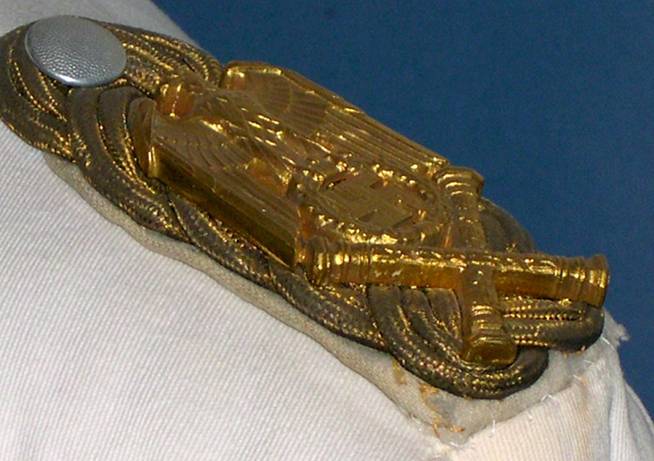
A close up of Goring’s Reichsmarschall
shoulderboard on the flyers blouse tunic. It appears as though the board may
have been restored to the tunic at some point due to the poor sewing job on
the seam and the fact the retaining button is silver (it should be gold). ( |
Reichsmarschall Headgear
|
|
|
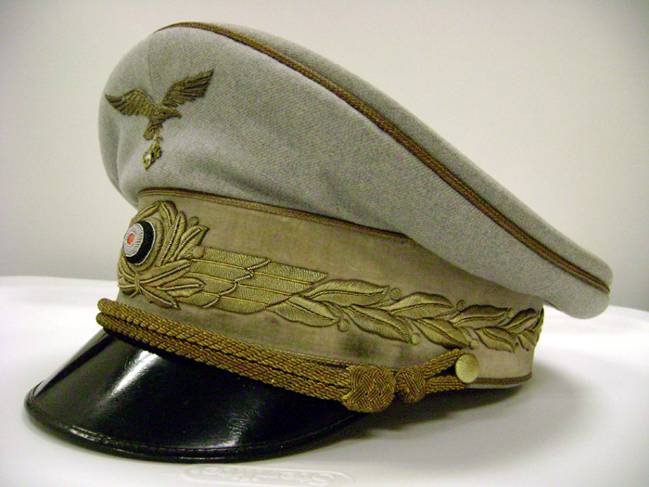
One example of Hermann Goring’s many visor variants
for his rank as Reichsmarschall, this one
exhibiting a laurel wreath that is hand embroidered completely around the cap
band. Notice how the eagle is
stitched directly to the visor cloth. (Paul Sack collection) |
|
|
|
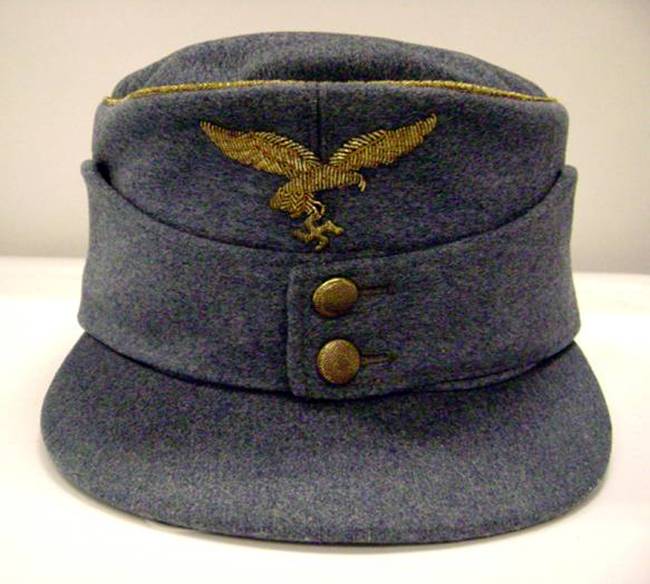
Hermann Goring’s visored
flyer’s cap. The eagle on
this example is also stitched directly to the cap fabric. (Paul Sack collection) |
|
|
|
|
|
|
|
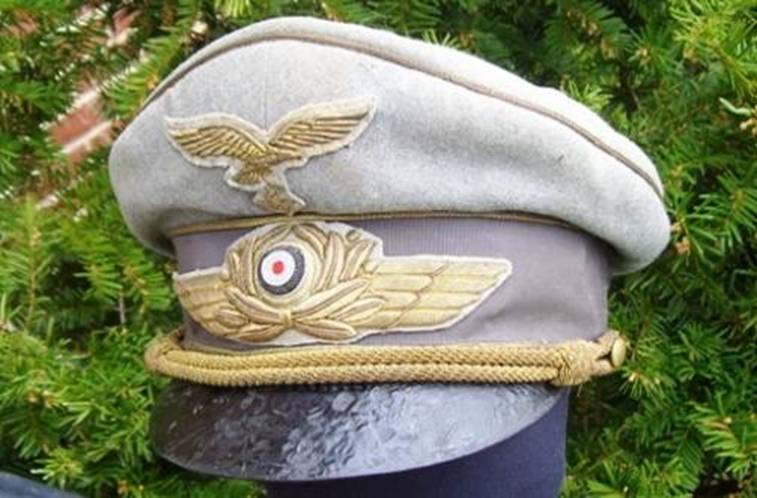
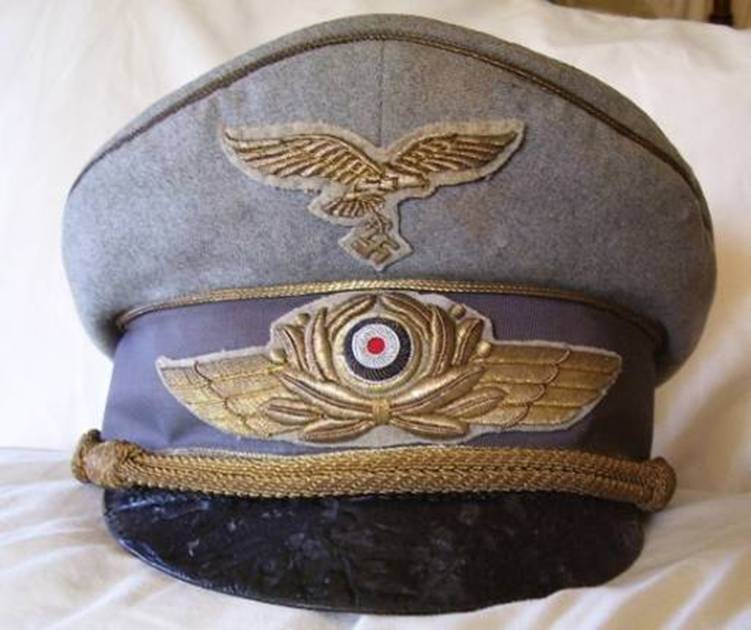
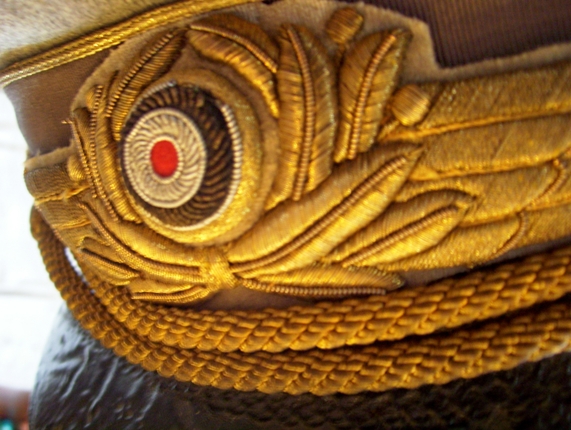
This example of a Reichsmarschall
“crusher” visor was captured from Goring’s train by a 101st
Airborne veteran. Notice
how the insignia is not sewn directly to the crown or cap band, unlike the
majority of his other headgear. (private collection) |
|
|
|
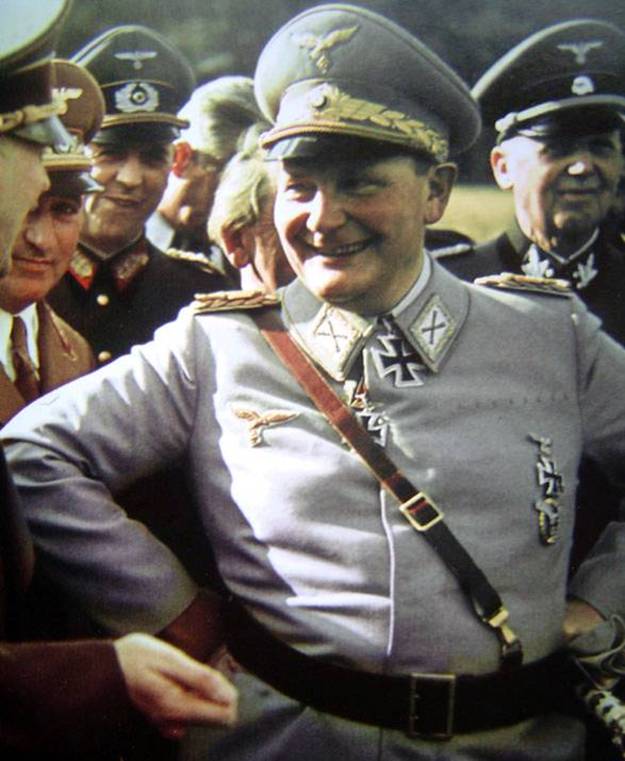
Goring in his full Reichsmarschall
uniform and regalia (his RM baton can be seen affixed to his belt in the
lower right). |
Reichsmarschall Command Flags
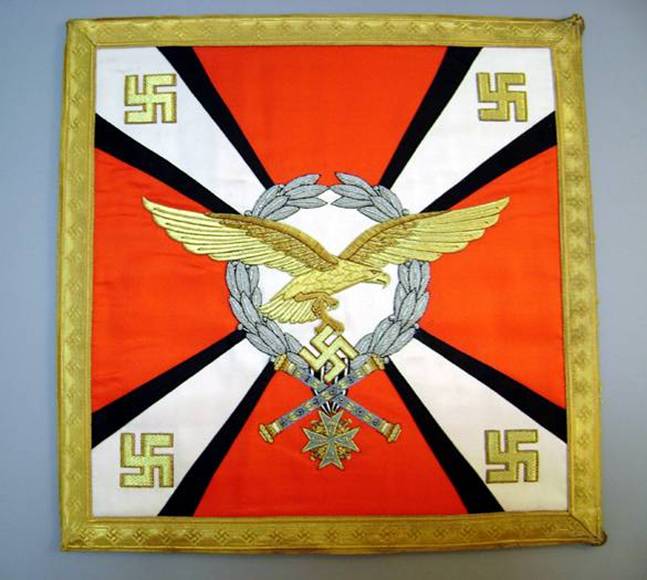
Generalfeldmarschall Hermann Goring
Command Flag
Goring several, personal command flags produced. This particular flag was produced upon
his promotion to Generalfeldmarschall, and was a very
elaborately rendered work of art, showcasing the finest embroidery talents of
the period, utilizing a mixture of bullion, aluminum, brocade and yarn.
(Wolfe-Hardin)
|
|
|
|
|
|
|
|
|
|
|
|
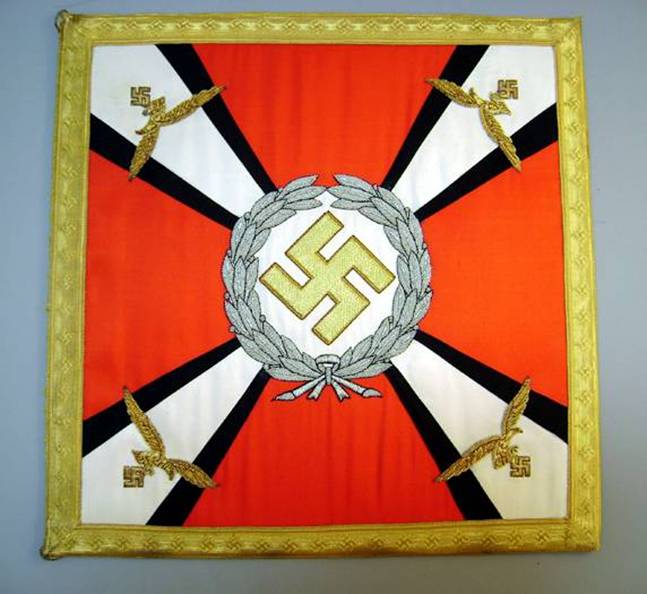
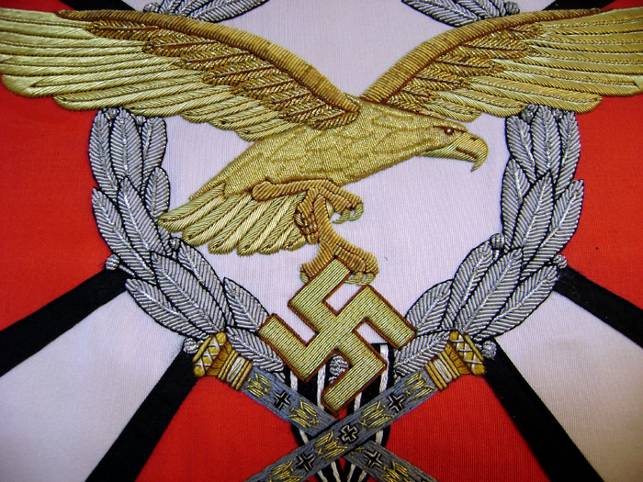
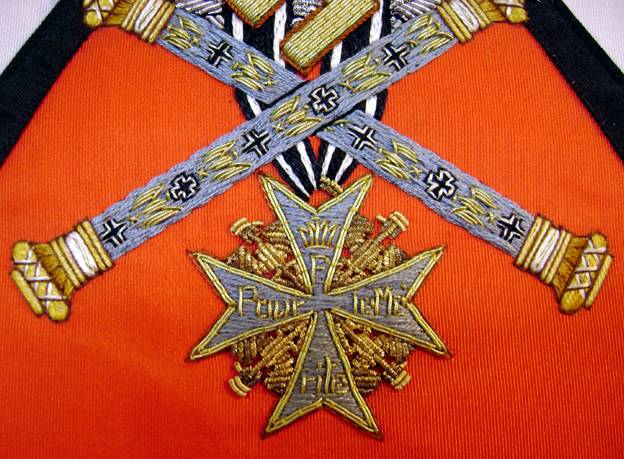
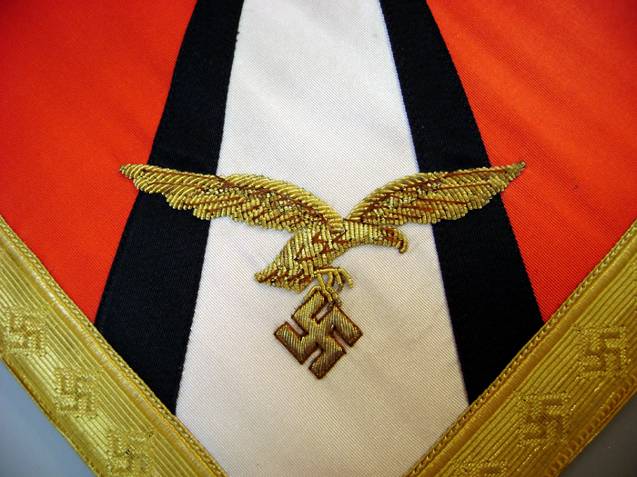
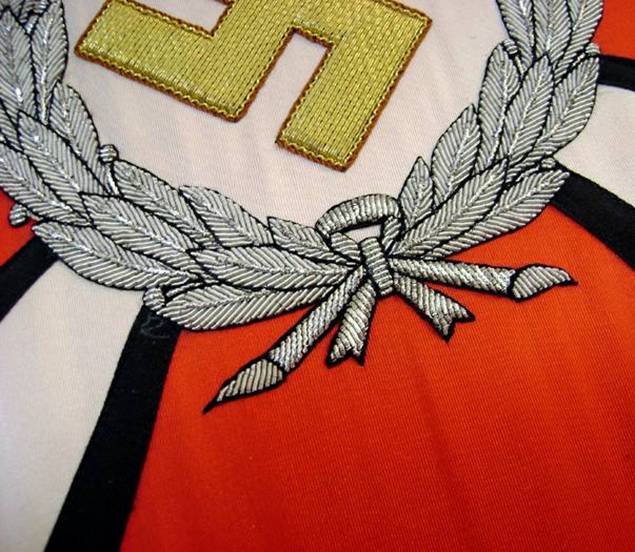
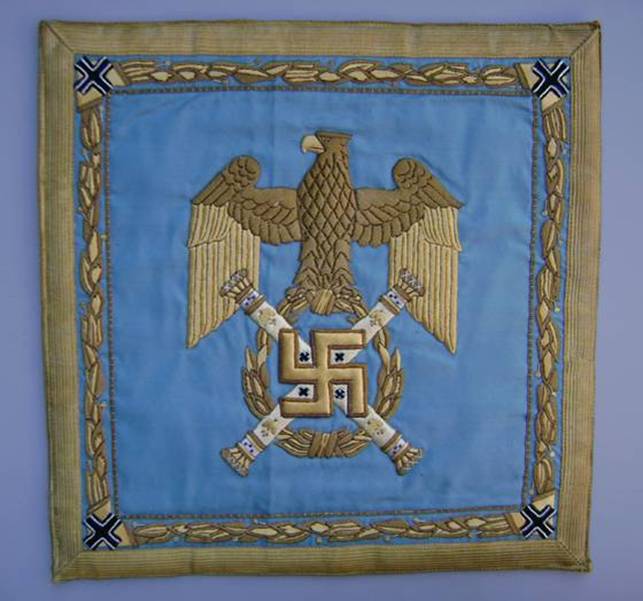
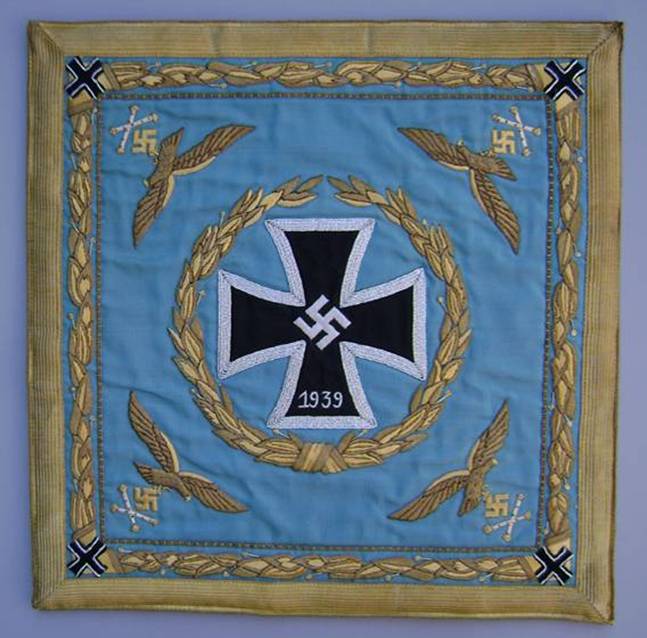
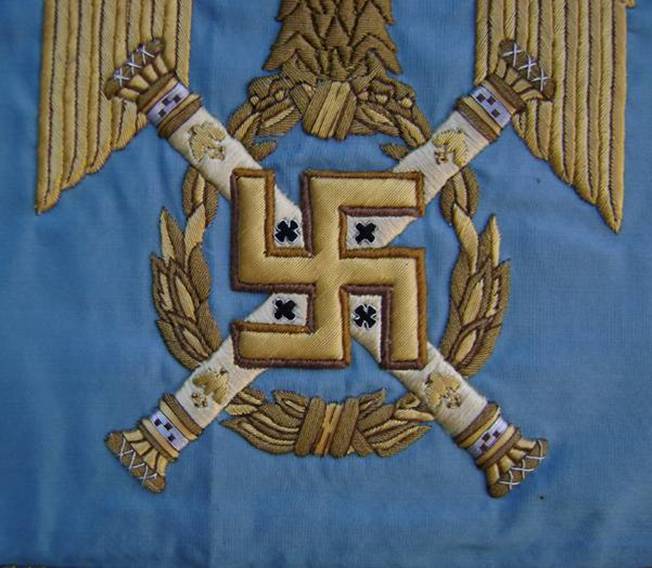
Reichsmarschall Hermann Goring
Command Flag
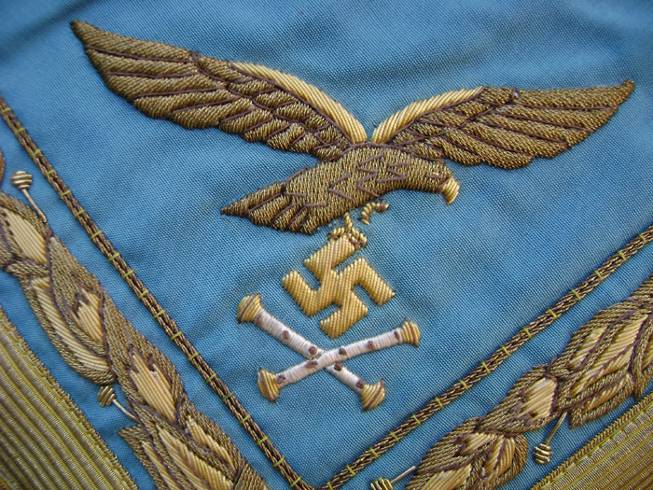
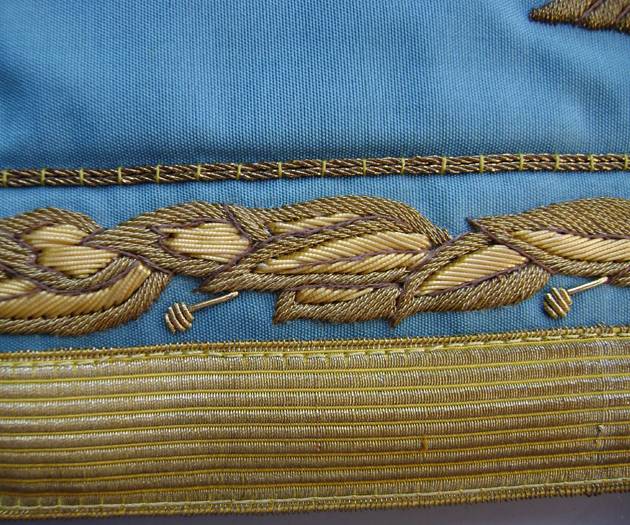
Hand embroidered example of the special flag produced for
Goring’s unique rank of Reichsmarschall,
incorporating the crossed, white Reichsmarschall
batons motif throughout the design.
The embroidered Luftwaffe eagles on the reverse are a bit larger than
breast eagles and just as intricately rendered.
(Wolfe-Hardin collection)
|
|
|
|
|
|
|
|
|
|
Reichsmarschall Hermann Goring
Printed Command Pennant
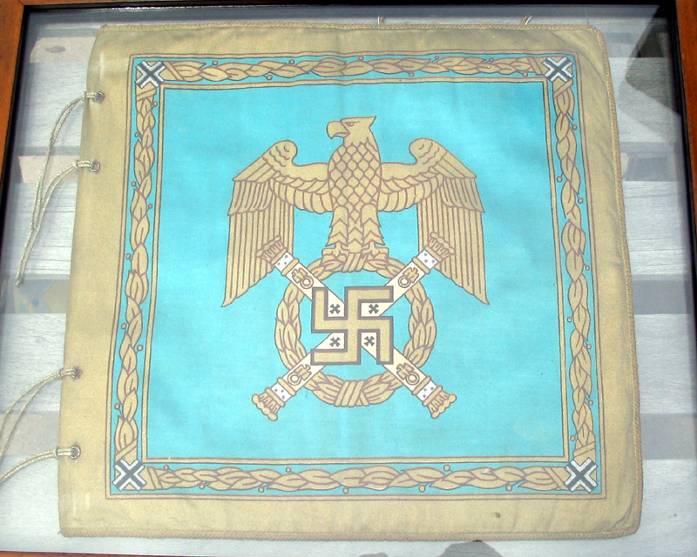
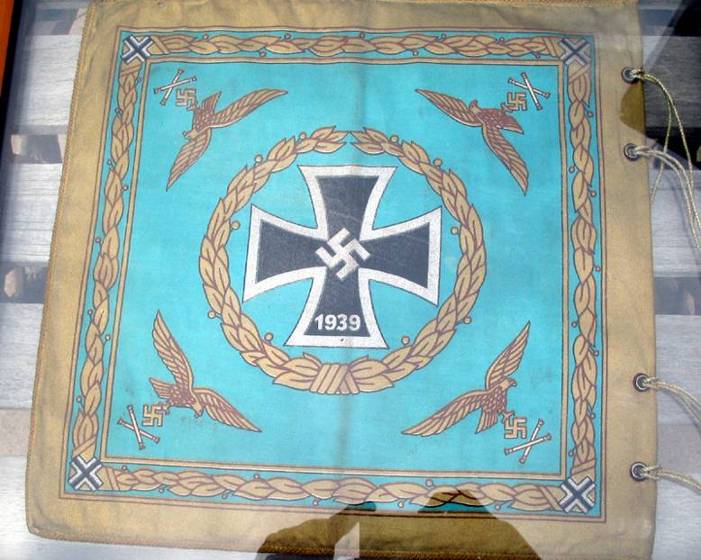
The Reichsmarschall command flag
was also produced in a version that was printed.
(private collection)
|
|
|
|
|
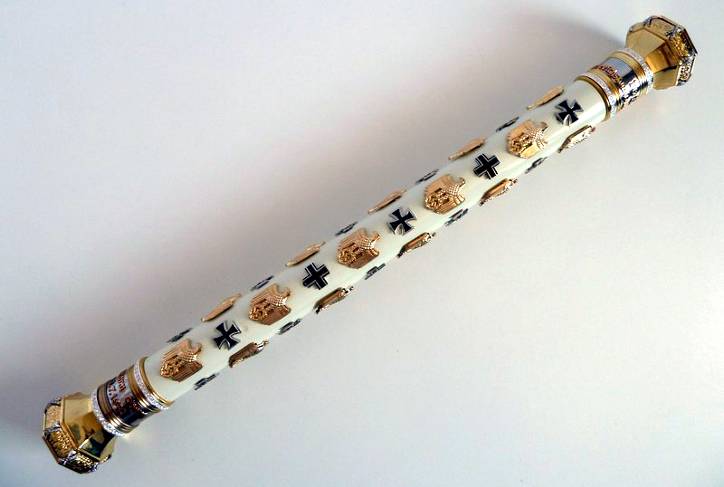
If you enjoy Reichsmarschall
Goring memorabilia, I now offer nice quality replica, diamond encrusted Reichsmarschall batons. Please visit my Replica Batons For Sale page if
interested. A photo of the
replica Reichsmarschall baton is shown below. |
|
|